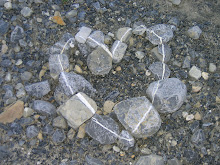
remember I told you a while ago about Penny McBreen? an artist whose work I have been buying since the mid 1980s? the photo above is the detail from a beautiful piece of work I saw in her gallery
.
of which, more later; oh, alright then. . . here's a little more. . .
 in the meantime, this is how she does it (raku, that is) (the way the glazing is created)
.
"An aluminum can is used in raku firing is working as a reduction tube: a container with a small hole that allows carbon dioxide to pass through. By closing the container, a "reduction atmosphere" is created. A reduction atmosphere needs to be created because of the effects of oxygen on the clay and its color. It also has extraordinary effects on the metals inside the glaze. Reduction is a decrease in oxidation number. Closing the can starves the air of oxygen after the combustible materials such as sawdust catch fire, forcing the reaction to pull oxygen from the glazes and the clay. A reduction agent is a substance which electrons are being taken from by another substance that is being reduced. The reaction uses oxygen from the atmosphere within the reduction tube, and in order to continue, it receives the rest of the oxygen from the glazes. This leaves ions and iridescent luster behind. This creates a metallic effect, pleasing to the eye. Pieces with no glaze have no where to get the oxygen from, so they take it from clay. Such an atmosphere will turn clay black, making an unattractive, matte color, with no sheen whatsoever. The science of oxidation reduction gives each piece its unique color and texture, and by understanding the oxidation process, we are understanding the process each clay piece goes through."
.
of which, more later; oh, alright then. . . here's a little more. . .
in the meantime, this is how she does it (raku, that is) (the way the glazing is created).
"An aluminum can is used in raku firing is working as a reduction tube: a container with a small hole that allows carbon dioxide to pass through. By closing the container, a "reduction atmosphere" is created. A reduction atmosphere needs to be created because of the effects of oxygen on the clay and its color. It also has extraordinary effects on the metals inside the glaze. Reduction is a decrease in oxidation number. Closing the can starves the air of oxygen after the combustible materials such as sawdust catch fire, forcing the reaction to pull oxygen from the glazes and the clay. A reduction agent is a substance which electrons are being taken from by another substance that is being reduced. The reaction uses oxygen from the atmosphere within the reduction tube, and in order to continue, it receives the rest of the oxygen from the glazes. This leaves ions and iridescent luster behind. This creates a metallic effect, pleasing to the eye. Pieces with no glaze have no where to get the oxygen from, so they take it from clay. Such an atmosphere will turn clay black, making an unattractive, matte color, with no sheen whatsoever. The science of oxidation reduction gives each piece its unique color and texture, and by understanding the oxidation process, we are understanding the process each clay piece goes through."


 but that still leaves me needing something yummy to offer you today - while I think about it, would you like a delicious crunchy apple?